I love living in Stamford, CT. I highly recommend this beautiful and diverse waterfront city to anyone looking to move to Fairfield county in Connecticut.

Stamford Offers lots of great shopping and wonderful restaurants. Great beautiful beaches and water properties. Stamford is approximately 40 Square miles. 35 miles North East of New York City. There are several parks with playgrounds, tennis, basketball and picnic areas. Stamford offers museums and nature trails. A public golf course called Sterling Farms. The approximate population is 125,109 (est. 2012).

When buying or selling, let me my real estate experience go to work for you. I will find you your dream home. There is not a better time to buy/invest then now! Rates are at the lowest they have ever been within 60 years.

If you are a buyer, now is the time for you to buy! Don’t miss it! I will make your transition as smooth as possible

Stamford ZIP Codes: 06901, 06902, 06903, 06904, 06905

Approximate Location Boundaries: Greenwich CT., New Canaan CT., Darien CT., and Bedford, New York

Location Characteristics: Great City with Lots of Corporate Buildings and Shopping. Good schools, Public Golf Course and lots of Great Beaches along with lots of great restaurants and night life.

Please call me for a free market evaluation, Chris Maroc, Coldwell Banker Residential Brokerage 914-215-2025

aerial view


Stamford Restaurant Weeks 2014

Stamford Restaurant Weeks 2014

Stamford Summer Restaurant Weeks return August 18 – September 1, 2014.

This Summer over 30 Downtown Stamford restaurants are serving up special lunch & dinner prix fixe menus in several different price options. The prices for lunch range from $10.14, $12.14 or $20.14 and dinner ranges from $15.14, $20.14 or $30.14. New this year: each participating restaurant will be mixing up its very own Signature Summer Cocktails to be featured during Restaurant Weeks.

Menus will be posted soon, so check back often!

View the list of participating restaurants below:

Restaurants offering $10.14 Lunch and $15.14 Dinner:

Franklin Street Works Cafe* – RW Menu – 203-595-5211

Fuji Asian Restaurant* – RW Menu Coming Soon – 203-967-8989

McFadden’s Stamford* – RW Menus – 203-324-4448

Tomatillo Taco Joint* – RW Menus – 203-324-4777

Restaurants offering $12.14 Lunch and $20.14 Dinner:

Azuca – RW Menus – 203-817-0189

Capriccio Café* – RW Menus – 203-356-9819

Castle Bar & Grill* – RW Menus – 203-357-9800

Fin II Japanese Restaurant* – RW Menus – 203-359-6688

Kotobuki – RW Menus – 203-359-4747

Lucky’s Classic Burger* – RW Menu Coming Soon – 203-978-0268

Quattro Pazzi* – RW Menus – 203-324-7000 – Make Reservations

Remo’s Brick Oven Pizza* – RW Menus – 203-973-0077

Sam’s American Bistro – RW Menus – 203-977-1265

Tengda Asian Bistro – RW Menu Coming Soon – 203-353-8005

Volta Gelateria Creperia* – RW Menus – 203-883-8841

Restaurants offering $20.14 Lunch and $30.14 Dinner:

Aria – RW Menus – 203-324-2742 – Make Reservations

Bar Rosso* – RW Menus – 203-388-8640 – Make Reservations

Barcelona Restaurant & Wine Bar – RW Menus – 203-348-4800

The Capital Grille* – RW Menus – 203-967-0000 – Make Reservations

Cask Republic – RW Menus – 203-348-2275 – Make Reservations

Columbus Park Trattoria* – RW Menus – 203-967-9191

Cotto Wine Bar* – RW Menus – 203-914-1400 – Make Reservations

EOS Greek Cuisine* – RW Menus – 203-569-6250 – Make Reservations

F•I•S•H•* – RW Menus – 203-724-9300 – Make Reservations

Gastro Bar – RW Menus – 203-817-0392

Hudson Grille* – RW Menu – 203-883-8600 – Make Reservations

Kona Grill* – RW Menus – 203-324-5700

Lola’s Mexican Kitchen – RW Menu Coming Soon – 203-674-5652 – Make Reservations

Morton’s, The Steakhouse – RW Menu – 203-324-3939 – Make Reservations

napa & co. – RW Menus – 203-353-3319 – Make Reservations

Patrizia’s of Stamford – RW Menus – 203-348-8000 – Make Reservations

The Fez – RW Menus – 203-324-3391

Villa Italia – RW Menus – 203-348-7742

ZAZA Italian Gastrobar – RW Menus – 203-348-2300

– See more at: http://www.connecticutrestaurantweek.com/restaurant-weeks-ct/stamford-restaurant-week-2011/#sthash.SHEILcz5.dpuf

Clarifying a Home Inspection

Kevin O'Connor

How to make a Money-Making Yard Sale

How to Have a Money-Making Yard Sale

10 tips on how to rake in the big bucks when you put your old stuff out to sell

  • friends holding yard sale

    Sell, Sell, Sell

    While the art of a yard sale may seem pretty straightforward, simple alterations in timing, pricing, and display can make the difference between a successful sale and a full-on flop.

    In honor of National Garage Sale Day (August 13), we talked to Ava Seavy ofGarageSaleGold.com on the dos and don’ts of selling your unwanted wares the good old-fashioned way. Follow these tried-and-true tips and you may just strike gold.

  • estate sale sign

    1. Title Your Event Wisely

    “Estate Sale” or “Moving Sale” implies that you’re liquidating a house’s contents, and can earn you more than “Garage Sale.”

  • couple nailing up yard sale sign

    2. Drum Up Attention

    Place ads in local newspapers, online, or on public bulletin boards. Reserve signs for the day of the event, and only include the sale’s date, time, and directional arrows to its location.

    Make sure your signs are readable from a distance that will give a driver time to slow down and turn. That means bold, thick, black letters on large, brightly colored posterboard, readable from a few hundred feet down the road.

  • beaten up chair with free sign

    3. Offer Freebies

    While you shouldn’t hand out items without a catch, encourage people to spend more with buy-one-get-one deals, which let you truthfully advertise free goods.

  • calendar

    4. Don’t Forget Friday

    Many experts maintain that Sunday is the best day for a sale, since people tend to reserve Saturdays for running errands. But Seavey advises, “Start your sale earlier in the week than you think. Believe it or not, the best day of the week to hold a sale is Friday, as this is when most dealers and retired people will come.”

  • house with yard sale sign on lawn

    5. Time It Right

    Most business generally happens in the morning, says Seavey, so it’s best to get an early start. Open for business at around 9 a.m. and finish up in the late afternoon.

  • concrete blocks

    6. Don’t Toss Workshop Leftovers

    Building supplies and materials, including leftover lumber, old tools, gutter segments, and remainders of stone or marble are some of the hottest items, claims Seavey. Just arrange like items together, and if they’re heavy, prop them against a wall.

  • town hall

    7. Get the Go-Ahead from Officials

    Before a sale, check with your municipality to ensure you’re following local rules and guidelines. For example, some towns require permits or restrict you from having more than a few sales a year. You should also make yourself aware of federal regulations regarding the resale of items like baby furniture, which can pose risks because of recalls.

  • woman looking at yard sale display table

    8. Display Merchandise with Care

    Never place items, unless they’re pieces of furniture, on the ground. Rather, hang items or place them on tables, and cover those tables with sheets or tablecloths to give your sale a neater look.

  • hands pricing yard sale items

    9. Price Goods Based on Condition

    Seavey, our expert, likes to follow the 50-30-10 rule: She sells almost-new items at 50 percent of retail; slightly used items at 25-30 percent of retail; and used items at 10 percent of retail. Even if you believe something is worth more, think about what you would consider to be a bargain price; your back yard is not an antiques shop, and yard-sale browsers are there to get a deal.

  • tagged items at yard sale

    10. Tag Everything

    Avoid wasting time and attention haggling with customers over prices by affixing tags in an easy-to-find spot on each item (unless you group them with other similar products that all cost one set price).

    If you are thinking of selling your home and would like an experienced Realtor to list your home, please call me, Chris Maroc, Coldwell Banker Residential Brokerage, 914-215-2025. Thank you!


“LOVE IT OR LIST IT” TIPS TO HELP YOU DECIDE WHETHER TO REMODEL OR SELL

“LOVE IT OR LIST IT” TIPS TO HELP YOU DECIDE WHETHER TO REMODEL OR SELL

Written by , Realty Times.

As home prices increase, homeowners have options. Some are quickly gaining back the equity they lost over the last several years. That creates opportunity to refinance, remodel, or maybe sell.

If you’re sitting on the fence trying to determine whether to list your home for sale or to stay in it, consider these important tips.

Tip 1: Do a “Love it or List it” Analysis.

On a sheet of paper write down the things you love about your home and the things that might cause you to decide to list your home for sale. Take your time doing this. Really give every aspect of your home consideration. Do you like the neighborhood? Is it where you want to stay for a long while or even retire? Is the area or your home lacking something? Could remodeling your home be the solution?

Once you do the “love it or list it” analysis, you’ll be able to identify which parts of your home are bothering your the most. With that information, you can now start to explore more options.

Tip 2: Do your research.

This applies to both options–remodeling or selling. Visit other neighborhoods that you might like to live in. Carefully explore the surrounding area, the homes, the types of people, the shops, businesses, and churches. Think about your commute. Would it be longer? Would it cost more in gas? Are there any gains to offset extra costs? Gathering these details will help you add more to your “love it or list it” analysis.

Also, invite some real estate agents to your home to get some expert advice on how much your home would sell for and how long it might take. When you get that information, it can help you determine if selling is best.

Next visit some remodeling companies. See their remodeling projects and invite their team to your house to offer their suggestions. Sometimes what a homeowner thinks is a difficult remodel is really quite simple. Of course, the opposite is true too. For instance, if a home doesn’t have the supporting structure it needs, a remodel could become very complex or, in some case, impossible, which might prompt an immediate desire to sell.

Tip 3: Have your financial records in order.

Whether you decide to remodel or sell, having your financial records easily accessible is vital. You’ll need these documents for both situations. Knowing what upgrades you’ve already done to the home will help when it comes time to sell. And, having your tax documents and other financial information on hand will help you if you decide to remodel using financing.

Tip 4: Evaluate the process.

Talk to expert listing agents and remodeling companies so that you can completely understand what to expect with both processes. If you’re listing your home, learn about the marketing process, holding open houses, showing your home, what large items might need to be removed, and the overall timing of how long you’ll need before you close escrow. For remodeling, get details about the length of the expected renovation. Will you be able to live in the home or will you have to find a place to stay? Will you use one firm to do both the design and build process? Often this is easier and can be less costly than using several contractors.

Take your time and pay close attention to all the details. Both selling and renovating a home are major decisions. Make sure you give the decision-making process ample time as well as compiling a considerable amount of research to make your final decision.

 If you are interested in selling your home, please call me for a free market analysis. Thank you, Chris Maroc 914-215-2025.

Open House‬ Sunday‬, ‪‎August 17th‬ 1:00 pm-3:00 pm. 301 Sun Dance Road, ‪Stamford‬, ‪‎CT‬.

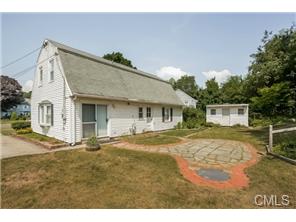
front of house back yard


Open House‬ Sunday‬, ‪‎August 17‬ 1:00 pm-3:00 pm. 301 Sun Dance Road, Stamford‬, ‪‎CT‬. $459,000.00

‪‎Quiet‬ and convenient ‪‎Mid Ridges‬ Colonial‬ located at the end of a‪ ‎cul-de-sac‬. Nicely updated, bright and clean, ‪‎4 bedrooms‬ plus den,‪ ‎2 full baths‬, eat-in kitchen‬ with stainless steel appliances‬.‪ ‎Hardwood floor‬ upstairs, gas forced air heat, second floor storage room and cedar closet, plus large garden shed. Original owner, Perennial‪ ‎gardens‬ and terraces‬ are overgrown, but have potential for a gardener. Any questions, please call Chris 914-215-2025.

11 Ways to Update Your Kitchen Without a Sledgehammer

6 Tips To Save To Buy A Home

by Phoebe Chongchua

Interest rates remain historically low and even though housing prices are increasing in many areas, the market still offers lots of opportunities to become a homeowner. But what’s holding many back is saving enough for a downpayment.

Reaching any goal requires dedication to that goal and a mindset that enables you to sacrifice to achieve what you desire. Often that’s easier said than done. However, if you analyze your spending and lifestyle habits you can determine where you can conserve to create enough of a reserve to comfortably buy a home without feeling totally deprived.

Here are six tips that can help you put away $50 to hundreds of dollars each month. Start with a fresh sheet of paper or a digital document that you can refer to frequently. Keeping it fresh on your mind will help you achieve your goals.

1. Write down what you owe versus what you earn. Get clear about how much is coming in and how much is going out. This alone will help you see where money is being spent and how much is being spent on things that could be cut back or cut out completely.

2. Consider getting rid of recurring expenses for services you don’t really use or you use infrequently. Maybe it’s a gym membership that’s adding up to more than a $1,000 for the year; but you really only use it three or four times a month. That makes no sense. Get rid of it and find a workout buddy and a free place to exercise. Or it could be an audio or video membership that’s going to waste. Sure, it might be $20 a month but over a year, that adds up.

Try listening to podcasts. They’re free! Some podcasters are very entertaining and their podcasts can be excellent sources of information and resources for business and personal development.

3. Stop the coffee run each morning. Do the math. That fancy coffee drink can cost $40 a week, especially if you add a bakery treat. Your waistline and your wallet will take a beating.

4. Cut back on eating out or dine out early. Make more meals at home. This will allow you to take leftovers for lunch the next day. When you do decide to eat out, dine out earlier in the day. You can often take advantage of eating the same great meal at a less expensive price by ordering from the happy hour menu. These days, lots of people find saving and living lean to be hip and cool. They’ll be happy to join you for an earlier meal.

5. Start a side job. If you’re working a full-time job, evaluate what your skill set is and see if you can freelance. I spoke with a client recently who had a “day job” and was earning additional income. He was already up about $50,000 from his side job of selling auto parts. It may take a bit to figure out where and how you can earn your side income, but it’s worth exploring. This could even turn into a full-time job. Lots of people are making money working from home using the Internet. Explore your options and see how you can generate some extra cash each month.

6. Use momentum to pay back your debt. Work hard to pay down cards with the highest interest rate first. As one card is paid off, transfer the money you were paying on that card to another card. By combining whatever you were paying on the paid off card to another balance that you’re paying down, you’re giving it some momentum and you’ll get that next card paid down even faster.

Remember that reducing your spending is critical to having what you want. So don’t add to your debt. Once you save for your deposit, you’ll want to make sure that you also save enough to have a cash reserve for emergency repairs and any unexpected crisis that might occur. Also, make sure that you make this process a good experience rather than a painful one. Keep your eye on the goal and understand that the decisions you make today will impact your future and your opportunity to become a homeowner.

If you are interested in buying a home or selling a home, please let my real estate experience go to work for you. Please call me, Chris Maroc 914-215-2025.

How to Sell Your Home Without Dropping Your Price

by Blanche Evans

When your home is marked down from its original price, it’s a sure sign that your marketing plan failed. Not only have you missed the critical first two weeks when buyers and real estate professionals are most interested, but there’s no way for your home to compete with other homes that are better priced.

No one wants to waste time trying to deal with an unreasonable seller, so lowering the price may not help as much as you may think. Buyers may think something is wrong with the home, or they may decide that there’s room for even more discounts. Real estate professionals won’t get excited when your agent relists your home at a lower price because it’s not a new listing.

If you’re really ready to sell your home, don’t test the market. The best thing for you to do is to price it right in the first place and then sell as close to the original asking price as possible. For the best results, price your home at current fair market value — not where prices were in 2005, or where they might be in 2015.

Current fair market value means your home favorably compares to recent listings and closed sales of homes most similar to yours in size, finishes, amenities and location. It also means your home is on target with price trending. If homes are dropping in price in your area, you may want to set your original price under current fair market values in order to generate more interest from buyers. If prices are trending upward, stay current – don’t price ahead. That only works in the strongest sellers’ markets when banks are more comfortable about rising prices.

Next, make sure that buyers see your home in the best light. Among real estate professionals, the most important considerations is how your home looks from the curb and how it looks online. First impressions require that you spend particular time and attention on curb appeal, from keeping your walks and drives swept, to painting the front door a fresh new color, to putting out a new welcome mat.

Photography can be your home’s best selling tool when it’s done correctly and professionally. Stage the rooms that will be photographed by removing clutter. Fluff the pillows, clear tabletops and countertops, and remove the dog’s water bowl and your children’s toys out of the viewfinder. Take a few digital shots and look for flaws – the rumpled bed, the wastebasket full of paper, or the closet bulging with clothes. Once all the flaws are removed, you’re home is ready for the professional photographer who has the right lighting and equipment to help you market your home.

In homeselling, less is more. You want the home to come forward and your belongings to fade to the background. If you have too much stuff, put the excess in storage. As little as $50 to $250 for short-term storage could make the difference in the buyer’s offer price.

When buyers come to your home, they will be looking for flaws, so make sure the little details are done, especially small repairs. The less that needs to be fixed or replaced, the better maintained and the more move-in ready the home appears to the buyer.

Buyer-friendliness is a factor that can’t be underestimated. If you want a certain price for your home, make sure to give the buyer something extra to make it worth paying full price. Offer to pay closing costs up to a certain amount, or offer to leave the washer, dryer and refrigerator.

It’s not just the home that needs to be attractive. As the seller, you’re part of the whole package. You should appear buyer-friendly, just as your home should appear move-in friendly.

A home that is priced to reflect current market conditions and shows well in person and online will always sell for more than homes that aren’t maintained and marketed as well.

Please call me, Chris Maroc at 914-215-2025 for a free market evaluation.

Are you interested in renting your home in Stamford?

So You’ve Decided to Rent out Your Home? Some Tips

Cynthia Kent and her husband, John, didn’t set out to be landlords, but career choices made it necessary.

“We have rented out our home in Florida for nine years because we move all over with the military,” says Kent, who recently relocated her family from Nevada to Alabama for yet another posting.

Some people become accidental landlords because of a job change or difficulty selling a house. Others find they need to rent out the home of an elderly parent who has moved into a care facility. More than 3 million owner-occupied homes were converted to rental properties between 2007 and 2011, according to a 2013 report by the Joint Center for Housing Studies at Harvard University.

Some advice for those taking on this challenging new role:

FINDING THE RIGHT TENANT

A credit check and legal background check can help you find reliable, honest tenants, says real-estate agent Gail Carpenter of Northwood Realty in Pittsburgh.

“Sometimes a credit check alone” will rule out an applicant, she says.

Personal references can be useful if the applicant is local and you have mutual acquaintances. Otherwise, be wary.

“Do not take ‘personal’ references too seriously,” says New York City condo owner Sharon Lynch, who rented her home to tenants while spending a year in California. “Anyone can get a friend to write something nice about them.”

Lynch suggests using an online directory to search for an applicant’s current address and get contact information for their neighbors. “Not only can these people tell you if your applicants are good neighbors, but they can also supply you with the landlord’s contact information,” she says, “just in case your potential tenant is faking you out, pretending a friend was his or her landlord.”

Meet applicants in person and really talk with them, Carpenter says.

And request a rent that doesn’t price good applicants out of the market. You might earn more over time with a slightly lower rent, she says, because “that can help you keep your property occupied, versus asking for the moon and then it sits there vacant.”

PREP THE HOUSE

Once you’ve found your tenant, clean your home thoroughly and “make the property as safe as it can be,” Carpenter says.

You may also want to tackle any looming home improvement jobs now, rather than leave your tenant to handle (or ignore) them when they become larger problems.

If you plan to return to the home eventually, it can be practical to drop the rent slightly and fill one room with belongings you’re leaving behind, rather than paying for a storage space. Put a new lock on that door and take the key with you.

DOCUMENT AND DISCUSS

“It helps to take pictures of the house inside and out,” Kent says, to document its condition and cleanliness.

Don’t skip anything, and don’t assume one panoramic shot of each room will do. If you’re leaving furniture, also photograph the condition and cleanliness of each piece.

When Lynch returned to find her tenant had damaged the kitchen countertop, such “before” photos were key in being able to use the tenant’s security deposit to help pay for repairs.

When your tenant arrives to inspect the home before moving in, Kent says, “have tenants sign a document of the pictures, showing the condition at move-in.”

That walk-through inspection is vital for both parties. “Always be present for the move-in and move-out inspections,” says Babette Maxwell, who has rented her home to tenants several times during her husband’s Navy career and founded “Military Spouse” magazine to advise other military families about challenges like this one.

Also, Maxwell suggests, “Provide your renter with a baggie of ‘approved’ nails, screws, picture hangers.” And if you “have specific products you want used on your counters, cabinets, floors, yard,” she says, “list them in the lease.”

TEND THE OUTDOORS

As you negotiate the lease, don’t forget to have a detailed discussion about outdoor space, too. Will you or the tenant pay for lawn cutting? Who will keep up with pulling weeds and trimming bushes? Is the tenant permitted to plant flowers and do other gardening?

You may want to do an outdoor cleanup before you leave and then have the tenant agree to maintain that level of neatness.

Scan the property for any trees that could fall on the house and assess their health. Better to pay now to have a sick tree removed than worry about the outcome of a storm.

PLAN AHEAD

If there are repairs or upgrades that you promise your tenant, set a schedule in your personal calendar for completing them in the weeks after they move in.

Kent also recommends leaving a “welcome binder that stays with the house with local information, cleaning requirements and other details.”

Make sure your tenant knows how to contact you and how to handle problems that might arise. Have a reputable contractor or other professional on-call in case something needs to be repaired, says Carpenter.

“A lot of landlords grumble about getting a call in the middle of the night,” she says, but things will inevitably happen.

Then, stay in touch. If you won’t be living close enough to check on the property yourself, arrange for a friend or hire a property manager to do so.

Being a landlord “isn’t just signing the lease and disappearing,” Carpenter says. A tenant will respect you and your property more if you remain involved.

If you are interested in renting your home, please call Chris Maroc, Coldwell Banker Residential Brokerage at 914-215-2025.